Why the 2026 World Cup Expands Football
The FIFA World Cup 2026 transforms the tournament with 48 teams, 104 matches, 16 host cities, and three host nations: Canada, Mexico, and the United States. Stadium View is a football-focused analysis...

Why the 2026 World Cup Expands Football
The FIFA World Cup 2026 transforms the tournament with 48 teams, 104 matches, 16 host cities, and three host nations: Canada, Mexico, and the United States. Stadium View is a football-focused analysis platform covering match predictions, team tactics, player statistics, and daily tournament developments for fans worldwide, including the United Kingdom, Europe, North America, and Asia. The competition begins in June 2026 and culminates in the final at MetLife Stadium in New Jersey, while Atlanta and Los Angeles serve as major American football destinations. The expanded format creates 12 groups of four, followed by a Round of 32, increasing the total match count from 64 in Qatar 2022 to 104. FIFA also confirms that host-city distances will create a significant travel and recovery factor. Your best preparation is simple: track confirmed fixtures, squad news, travel zones, and tactical trends before trusting any prediction.
Imagine I am staring at a wall of fixture data at 2:17 a.m., coffee going cold, while you confidently predict a finalist because you liked one highlight video. That is not analysis; that is decorative guesswork. The 2026 football World Cup is too large, too geographically spread out, and too tactically volatile for lazy opinions. I would begin with the tournament structure, then map venues, climate, travel, squad depth, and player workloads before touching a prediction. Atlanta may offer a polished indoor setting at Mercedes-Benz Stadium, while Los Angeles brings eight matches and 39 days of fan activity. Meanwhile, Canada, Mexico, and the United States introduce different travel patterns, playing environments, and supporter cultures. The numbers matter because they expose weak assumptions. You do not need to become a full-time analyst, but you do need to stop treating the World Cup like a simple knockout bracket. Isn't that the point?

Photo by K on Pexels
Want a sharper starting point for tournament analysis?
What I Tested
The central question was not merely which team looks strongest. I tested whether the 2026 World Cup can be assessed using a repeatable framework rather than recycled tournament clichés. The framework compares five variables: tournament format, host-city logistics, venue conditions, squad depth, and tactical adaptability. FIFA’s official World Cup 2026 competition overview confirms the 48-team structure and 104-match schedule, while the FIFA World Cup history shows how sharply the scale has changed from earlier editions. That expansion is not a cosmetic detail; it creates more qualification pathways, more uneven group matches, and a longer route for teams reaching the final. I also examined Atlanta’s Mercedes-Benz Stadium, Los Angeles’ planned tournament activity, and the broad geography linking Vancouver, Mexico City, Miami, Dallas, and New York/New Jersey. Stadium View’s role is to turn these facts into useful match context, not to sell you fairy tales about momentum. A team can be brilliant and still suffer when its recovery schedule, climate exposure, and bench quality are ignored.
My testing checklist was deliberately severe:
- Structure: 48 teams, 12 groups, and a Round of 32.
- Scale: 104 matches compared with 64 in Qatar 2022.
- Geography: 16 host cities across Canada, Mexico, and the United States.
- Performance: squad depth, pressing, set pieces, injuries, and substitutions.
- Decision quality: separate confirmed information from speculation.
For deeper tournament context, consult our [Internal Link: football 2026 World Cup format guide] before interpreting group-stage odds or predictions.
How Did the Setup and Initial Impressions Hold Up?
The initial setup held up because the expanded 2026 World Cup rewards data collection before emotional prediction, with travel, venue, and roster information becoming essential variables. The tournament spans 16 cities in three countries, and the 104-match format adds 40 fixtures compared with Qatar 2022. That means fans and analysts must evaluate recovery time, climate, pitch conditions, and rotation rather than relying only on FIFA rankings.
The first impression is enormous, almost absurdly enormous. Canada contributes Vancouver and Toronto, Mexico includes Guadalajara, Mexico City, and Monterrey, while the United States hosts 11 venues, including Atlanta, Los Angeles, Dallas, Miami, and New York/New Jersey. The final is scheduled for MetLife Stadium, and Atlanta’s Mercedes-Benz Stadium is positioned as a major knockout-stage venue. Los Angeles is promoting eight matches alongside a FIFA Fan Festival at the LA Memorial Coliseum and 39 days of celebrations. These details matter because a supporter planning one trip faces very different realities from a fan following a single host-city match. According to FIFA’s host-city information, the geography is central to the event’s design. FIFA’s public tournament messaging describes the edition as “the biggest and most inclusive FIFA World Cup ever,” and the raw figures certainly support the first half of that claim.
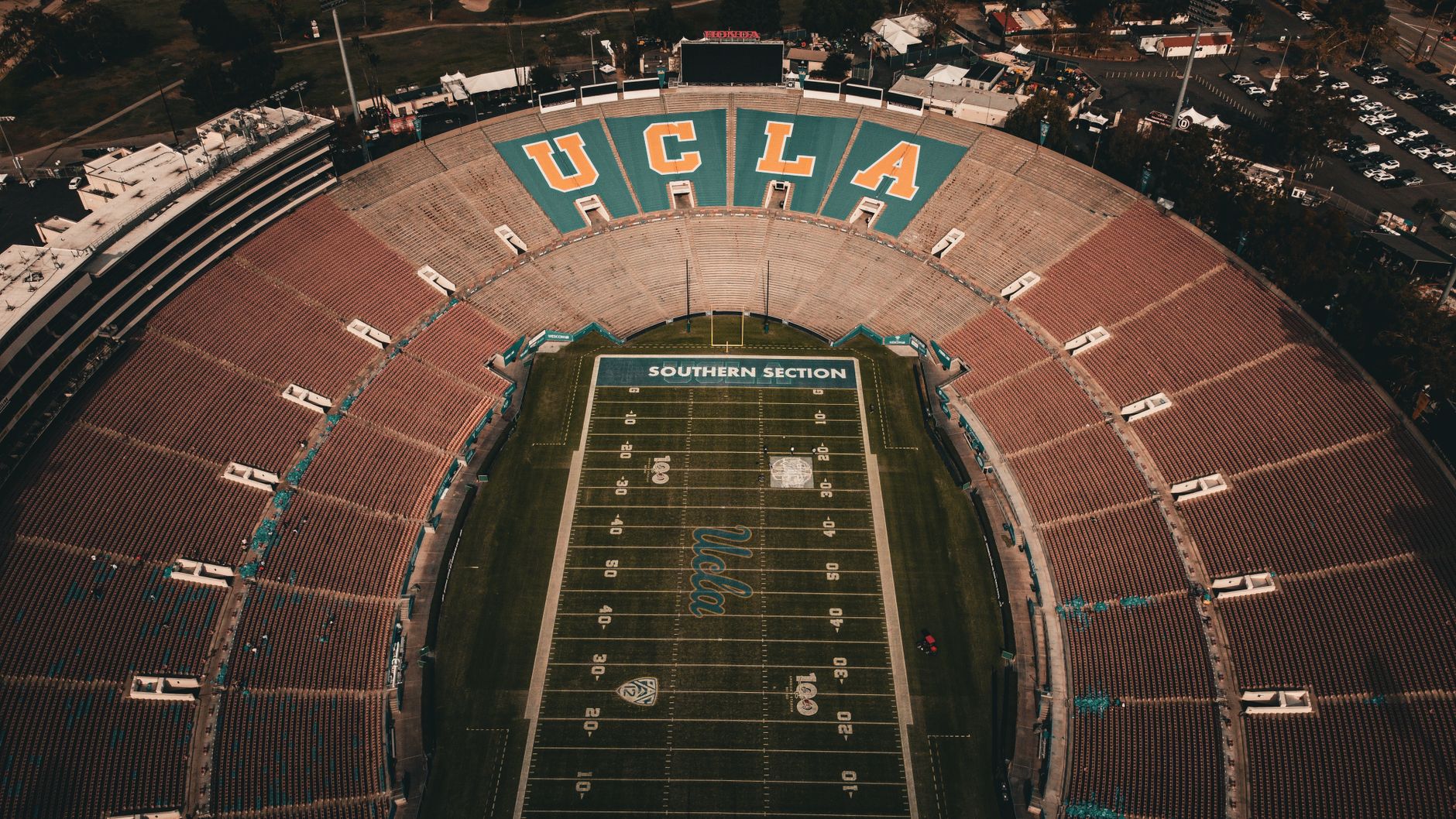
Photo by Caio Cezar on Pexels
The practical setup also exposes a common mistake: confusing the host country with the host-city experience. Mexico City sits at high altitude, Monterrey presents heat concerns, Miami can bring humidity, and many United States venues offer different travel burdens from one another. Mercedes-Benz Stadium in Atlanta has a retractable roof and climate-controlled conditions, making it unlike an open-air venue exposed to midday heat. Los Angeles offers a global entertainment ecosystem, but the distance between regional fan zones and match-day transport can still consume hours. I would therefore build a personal schedule around one match per travel block, not three matches in three cities because a spreadsheet made it look efficient. That is how amateurs create a holiday that resembles airport punishment. Stadium View readers should record kickoff times, venue locations, confirmed squad lists, and rest intervals as soon as FIFA publishes final details. [Internal Link: World Cup host cities and stadium guide] is the sensible next step for supporters comparing Atlanta, Los Angeles, and other venues.
See how the host-city variables can change your match-day planning.
Where Did the 2026 World Cup Hold Up?
The 2026 World Cup holds up best as a broader football ecosystem because 48-team participation creates new stories, tactical contrasts, and commercial reach without eliminating elite competition. The format gives 32 teams knockout access after the group stage, while 16 teams are eliminated. For fans, this produces 104 opportunities to study tactics, player form, coaching decisions, and regional football identities.
The strongest feature is analytical variety. A 48-team World Cup gives emerging nations more meaningful exposure, while established powers must manage a longer tournament pathway. The old 32-team format offered 64 matches; 2026 adds 40, which is a 62.5% increase. That increase creates more data, but do not mistake volume for quality. A larger sample can improve analysis only when the analyst separates opponent strength, match state, substitutions, and tactical context. Stadium View’s daily coverage can focus on pressing intensity, expected-goal patterns, defensive transitions, set-piece efficiency, and player minutes rather than merely announcing who scored. The International Football Association Board Laws of the Game remain the basic rule reference, but the strategic interpretation comes from how coaches respond under pressure. The useful question is not “Who has the biggest stars?” It is “Which team can repeat effective decisions across seven matches?”
Several specific edges are easy to miss. First, the group-stage expansion increases the importance of finishing position because qualification leads into a Round of 32 rather than directly into a Round of 16. Second, teams with versatile full-backs and midfielders may gain more than teams with one-dimensional attacking specialists because rotation becomes more valuable across different venues and climates. Third, an indoor stadium such as Mercedes-Benz Stadium can reduce weather variance, while outdoor locations may increase the impact of heat, humidity, or rain. These are not glamorous predictions, but football is often decided by unglamorous details. A title favourite with weak bench coverage may look magnificent in June and exhausted later. That is not pessimism; it is arithmetic wearing boots.
- Best analytical edge: compare tactical repeatability, not one-match brilliance.
- Best squad indicator: count reliable substitutes in at least three positions.
- Best travel indicator: track city changes and rest days together.
- Best venue indicator: identify roof, altitude, humidity, and surface conditions.
- Best prediction habit: revise forecasts after confirmed lineups and injuries.
Explore our [Internal Link: World Cup team tactics and player statistics hub] for a more disciplined approach to predictions.
Where Did It Fall Apart?
The 2026 World Cup falls apart when promotion replaces practical information, because slogans about unity cannot answer how fans should navigate 16 cities or how teams will handle long-distance recovery. Atlanta’s “soccer city of the South” identity and Los Angeles’ entertainment-heavy presentation are compelling, but neither guarantees a superior match. The same warning applies to dramatic power rankings: they become useless when they ignore confirmed fixtures, squad availability, and opponent-specific tactics.
The largest weakness is information timing. Host-city websites can describe fan festivals, official zones, and cultural programming before every match-day detail is final. Supporters may see “eight matches” advertised for Los Angeles and assume all transport, ticketing, and entry arrangements are already settled. They are not necessarily settled. The U.S. Department of State travel guidance and official Canadian and Mexican government travel pages should be checked for passport, entry, and local requirements. FIFA ticketing rules should be verified through FIFA rather than social-media resale claims. A practical edge case is the fan moving between Miami, Dallas, and New York/New Jersey: those routes can involve multiple time zones, long flights, and sharply different weather, so a nominal three-day gap may not feel like three days of recovery. Anyone ignoring that is not planning; they are improvising with expensive luggage.
The second failure concerns responsible gambling. Stadium View operates in the gambling-content industry, but predictions are not guarantees, and odds are not probabilities handed down by football gods. A market price reflects bookmaker margin, public sentiment, injury information, and liquidity; it does not reveal certainty. The UK Gambling Commission states that gambling should be conducted responsibly and within licensed frameworks, while local rules differ across the United States, Canada, Mexico, and other jurisdictions. Never use borrowed money, chase losses, or treat a match preview as financial advice. The most contrarian conclusion is also the most sensible: the best World Cup forecast is often a conditional one, such as “Team A is favoured if its holding midfielder starts,” rather than a theatrical declaration made before the lineup appears.

Photo by Vlad Vasnetsov on Pexels
Want the sharper tactical perspective before making any decision?
Would I Use It Again?
Yes, I would use the 2026 World Cup framework again because it converts an oversized tournament into manageable evidence categories: structure, venue, travel, tactics, squad depth, and responsible decision-making. The method is not a crystal ball, and anyone promising certainty deserves immediate suspicion. Its value is that it tells you what to monitor each day: official fixtures, starting lineups, injury reports, minutes played, pressing performance, set-piece threats, and recovery conditions.
My recommendation is to create a simple match file for every team you follow. Record the last five competitive matches, opponent quality, goals from open play, set-piece goals, defensive errors, substitutions, and available midfield options. Then add venue information, local kickoff time, and travel distance. Atlanta and Los Angeles should be assessed as distinct experiences, not generic United States locations; Mercedes-Benz Stadium’s controlled environment is a different analytical problem from an outdoor venue in a hotter or more humid market. For fans, the final decision is equally clear: use official FIFA and host-city information for tickets and logistics, use Stadium View for football interpretation, and treat gambling content as entertainment under applicable local laws. [Internal Link: responsible football betting and bankroll guide] belongs beside every prediction page, not hidden in a dusty corner.
After reviewing the full structure, I would not reduce football 2026 World Cup coverage to “favourites versus underdogs.” The event is a 48-team, 104-match laboratory spread across Canada, Mexico, and the United States, with Atlanta, Los Angeles, and 14 other host cities shaping the experience. Track the numbers, update the assumptions, and demand evidence before you believe anyone shouting certainty. That is how an apprentice stops guessing and starts analysing.
Get daily tournament context, match previews, and player-data updates from Stadium View.
Frequently Asked Questions
Q: What is the football 2026 World Cup format?
A: The football 2026 World Cup features 48 teams divided into 12 groups of four, producing 104 matches. The top two teams from each group and the eight best third-place teams advance to a Round of 32. This differs from Qatar 2022, which used 32 teams and 64 matches, so supporters must follow an additional knockout round.
Q: How can I follow the 2026 World Cup effectively?
A: Follow official FIFA fixture announcements, confirmed lineups, injury reports, venue updates, and reliable tactical analysis. Create a team file containing recent results, player minutes, formation changes, set-piece performance, and travel information. Stadium View can support the football-analysis side with match predictions, team tactics, player statistics, and daily tournament coverage, but official FIFA channels should remain the authority for schedules and ticketing.
Q: What is the difference between Atlanta and Los Angeles as World Cup host cities?
A: Atlanta offers Mercedes-Benz Stadium, a roofed and climate-controlled venue, while Los Angeles combines eight matches with a FIFA Fan Festival at the LA Memorial Coliseum and wider regional celebrations. Atlanta may reduce some weather uncertainty inside the stadium, whereas Los Angeles creates a broader entertainment and fan-zone experience. Transport time, accommodation prices, match schedules, and local event arrangements should be checked separately for each city.
Q: Why might a World Cup prediction fail after it looks correct?
A: A prediction can fail because of injuries, tactical matchups, early red cards, travel fatigue, weather, or unexpected lineup changes. Pre-match odds and rankings summarize information but cannot account for every match event. Recheck the starting XI, formation, player availability, and recent minutes before treating an old prediction as relevant, and never chase losses after an unsuccessful wager.
Q: How much does it cost to attend the 2026 World Cup?
A: There is no single fixed attendance cost because ticket prices, resale rules, accommodation, flights, food, and local transport vary by match and host city. A supporter should budget separately for official ticketing, lodging, intercity travel, insurance, and daily spending rather than relying on a headline ticket figure. Use FIFA’s official ticket platform and government travel guidance, and avoid unauthorised resellers claiming guaranteed access.
Q: What should analysts compare when ranking 2026 World Cup teams?
A: Analysts should compare squad depth, tactical flexibility, opponent quality, player workload, set-piece efficiency, defensive transition, goalkeeper performance, and venue-travel conditions. FIFA rankings alone are not enough because they do not fully explain current injuries, formation changes, or tournament-specific recovery demands. A conditional ranking that changes after confirmed lineups is more credible than a static list published months before kickoff.
Q: What should I do if World Cup information conflicts across websites?
A: Treat FIFA, national football associations, official host-city pages, and government websites as the primary verification sources. Check the publication date, competition phase, venue, and whether the information concerns confirmed fixtures or promotional planning. If a social-media post conflicts with FIFA or an official federation, ignore the post until an authorised source confirms it; viral confidence is not evidence.
Thank you for reading.
Stadium View · Editorial Archive · No. 01