Before You Train, Read This Fitness Breakdown
Football fitness training should combine aerobic endurance, repeated sprint ability, strength, agility, mobility, and recovery rather than treating running as the entire sport. A practical weekly plan...

Before You Train, Read This Fitness Breakdown
Football fitness training should combine aerobic endurance, repeated sprint ability, strength, agility, mobility, and recovery rather than treating running as the entire sport. A practical weekly plan uses 2 conditioning sessions, 2 strength sessions, 1 football-specific speed session, and at least 1 complete rest day. For a 90-minute match, players may cover approximately 8–12 kilometres, while elite players can perform 150–250 high-intensity actions involving acceleration, deceleration, and changes of direction. The Fédération Internationale de Football Association (FIFA) and Football Association both emphasise progressive training, appropriate recovery, and injury prevention. A useful starting target is 20–30 minutes of easy aerobic work, followed by 6–10 sprints of 15–30 metres and basic unilateral strength exercises. Track total training minutes, sprint quality, sleep, and soreness for 30 days before increasing workload.
Imagine a midfielder in the 88th minute: lungs burning, legs heavy, opponent pressing, and one final transition deciding the match. That moment does not care whether you completed a heroic 10-kilometre jog on Tuesday. It cares whether your body can repeat a 20-metre sprint, brake safely, scan for a teammate, and deliver a controlled pass under fatigue. That is football fitness.
Stadium View covers FIFA World Cup 2026 match predictions, team tactics, player statistics, and tournament analysis, but the same numerical discipline applies to training. You should know how many hard runs you perform, how quickly you recover, and whether your sprint speed is collapsing by the sixth repetition. Otherwise, you are not training intelligently; you are merely sweating with confidence. [Internal Link: beginner football training guide]

Photo by Franco Monsalvo on Pexels
If you are building endurance: train repeated efforts, not endless miles
Football endurance means sustaining repeated accelerations, recoveries, and technical actions for 90 minutes; it is not simply running slowly for an hour. A useful weekly structure includes 1 low-intensity aerobic session of 25–40 minutes and 1 interval session using 3–4-minute efforts at roughly 80–90% maximum heart rate. Add 6–10 short sprints after sufficient recovery to develop the ability to repeat decisive actions.
A long jog has value for beginners and returning players, but it cannot reproduce the stop-start demands measured in football. A study published in the Journal of Sports Sciences reported that match activity includes frequent changes in speed, with high-intensity running concentrated around decisive phases. That is why a player completing 5 kilometres at a steady pace may still fade badly during a match. The body has practised one rhythm, while football demands at least five: walking, jogging, cruising, sprinting, and braking.
Use this progression for 4 weeks:
- Week 1: 8 repetitions of 30 seconds hard and 60 seconds easy.
- Week 2: 10 repetitions of 30 seconds hard and 60 seconds easy.
- Week 3: 8 repetitions of 45 seconds hard and 75 seconds easy.
- Week 4: 6 repetitions of 60 seconds hard and 90 seconds easy.
Keep the hard efforts controlled. If your pace drops by more than 10% between the first and final repetition, the session is too aggressive or your recovery is poor. This is the unglamorous truth most amateur plans hide beneath motivational slogans.
The American College of Sports Medicine recommends gradual progression because sudden increases in training load can elevate injury risk. Keep weekly volume increases near 5–10%, especially after a break, and record distance, duration, perceived exertion, and next-day soreness. Stadium View readers who follow tournament intensity can apply the same logic: high-output teams do not attack every second; they manage phases before exploding.
A practical conditioning session
Warm up for 10 minutes with jogging, dynamic mobility, and three progressive accelerations. Then complete 8 repetitions of 20 metres at 90–95% effort, resting 60–75 seconds between sprints, before moving into 4 rounds of 3 minutes at a strong but sustainable pace with 2 minutes of easy jogging. Finish with 8 minutes of low-intensity movement and calf, hip-flexor, and hamstring mobility.
Do not sprint cold because your enthusiasm is not a substitute for tissue temperature. A 10-minute warm-up can raise muscle temperature, improve movement quality, and reveal early stiffness before it becomes a missed month. If you feel sharp pain, alter the session immediately; “pushing through” is often just poor decision-making wearing a brave costume.
Want a clearer performance framework? Use the training principles alongside match analysis and player workload data.
If you need more speed: strengthen acceleration and deceleration
Speed training should develop acceleration over 5–30 metres, maximum velocity over longer distances, and controlled deceleration because football players brake more often than they reach top speed. Complete 6–10 high-quality sprints with 60–120 seconds of recovery, keeping each repetition within approximately 95% of your best time. If times slow dramatically, stop; tired sprinting often teaches inferior mechanics and produces very expensive hamstring lessons.
Acceleration depends on force production, body position, and the first three steps. Lean slightly forward, drive the arms aggressively, and push the ground backward rather than reaching forward with the foot. Deceleration requires lowering the centre of mass, shortening the final steps, and controlling the knee over the foot. These details matter because a poor braking position can turn a routine change of direction into an ankle, knee, or groin problem.
A 2023 review in Sports Medicine linked well-designed strength and conditioning programmes with improvements in sprinting, change-of-direction ability, and injury resilience. The practical lesson is simple: sprinting alone is not enough. Pair speed work with split squats, Romanian deadlifts, calf raises, lateral lunges, and Copenhagen planks 2 times per week.
Perform this speed circuit after a full warm-up:
- 4 x 10-metre falling starts, resting 60 seconds.
- 4 x 20-metre accelerations, resting 90 seconds.
- 3 x 5-metre sprint, 5-metre brake, and 5-metre re-acceleration.
- 3 x 20-second lateral shuffle intervals, resting 40 seconds.
- 2 x 30-second ball-carrying bursts at match intensity.
Measure the fastest and slowest sprint. A difference above 5–8% suggests fatigue, insufficient recovery, or weak repeat-sprint capacity. That figure is more useful than declaring yourself “quick” because you beat a friend once in a parking lot.
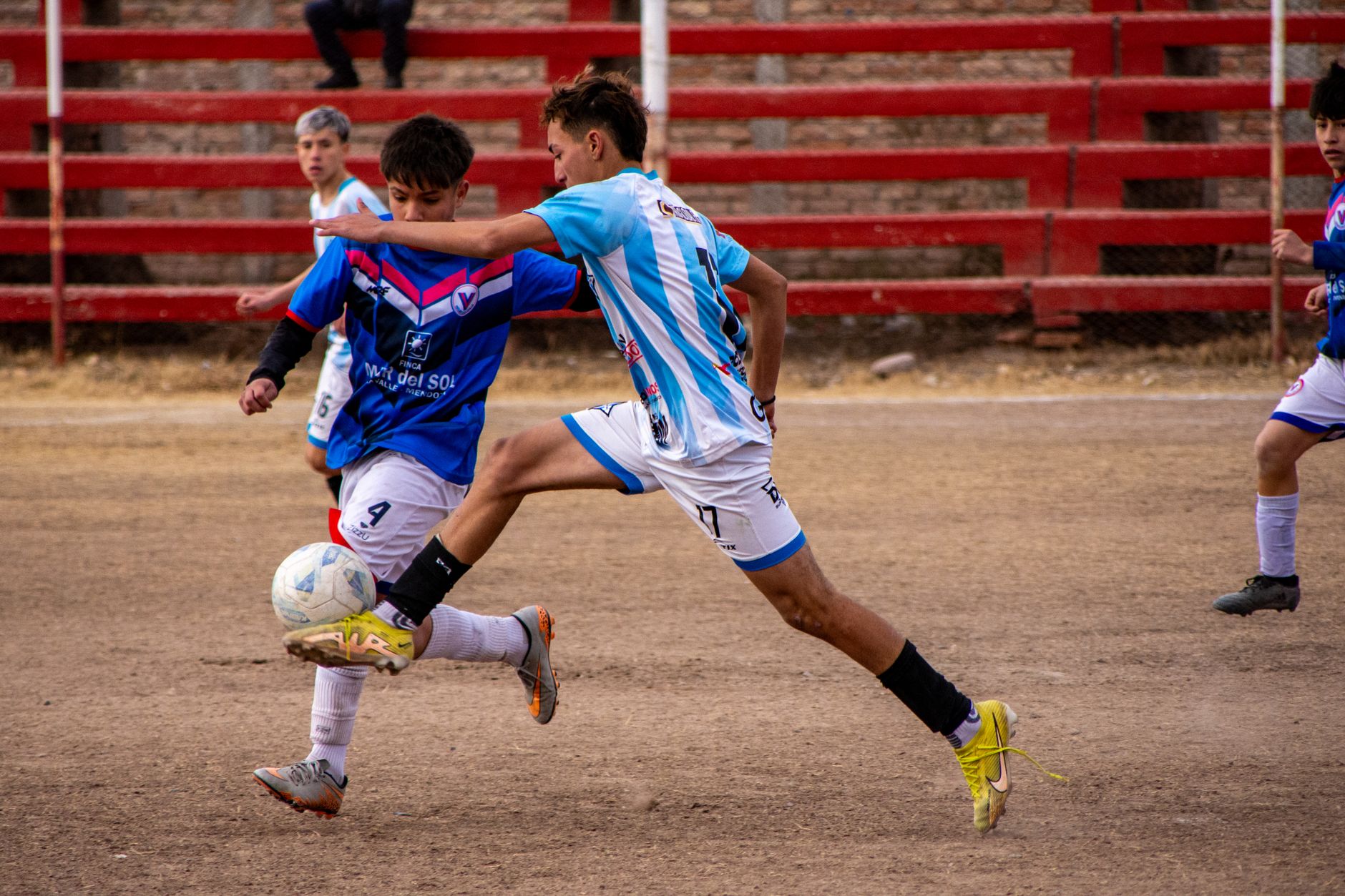
Photo by Franco Monsalvo on Pexels
If you play with the ball: combine fitness and decision-making
Football fitness improves faster when conditioning includes technical decisions, because the match never asks you to run without thinking. Use 3v3 or 4v4 small-sided games on pitches measuring approximately 25–35 metres long, with 2–4-minute bouts and 2-minute recovery periods. Reduce the player count to increase touches, transitions, and high-intensity actions; increase the space to encourage longer runs and open-field acceleration.
This approach creates a useful physiological and tactical overlap. Players must scan, receive, turn, press, cover, and sprint while tired, which exposes weaknesses a treadmill politely conceals. Research from UEFA Training Ground consistently highlights the value of game-based practice for connecting physical output with tactical behaviour. The best football fitness training tips therefore include the ball, an opponent, and a consequence for poor decisions.
Try the following 24-minute format:
- Four rounds of 4 minutes, using 3v3 plus goalkeepers.
- Two minutes of active recovery between rounds.
- A 5-second counter-pressing rule after losing possession.
- A maximum of 3 touches per player in the final 2 rounds.
- One bonus point for a goal scored within 8 seconds of winning the ball.
Track work rate, successful presses, turnovers, and sprint quality rather than goals alone. A forward may score twice while contributing little defensive intensity; a midfielder may create no goal but complete 14 pressure actions that change the match. Numbers expose the difference between visible drama and actual value. Stadium View’s tactical coverage follows the same principle when assessing teams at the FIFA World Cup 2026: output must be interpreted in context.
Add strength without becoming slow
Strength training does not automatically make footballers slow. Excessive bodybuilding volume, poor exercise selection, and inadequate mobility may make movement less efficient, but 2 weekly sessions built around 3–5 sets of 3–8 controlled repetitions can improve force production. Prioritise single-leg patterns because football is dominated by unilateral actions, not symmetrical barbell posing.
Recommended movements include:
- Bulgarian split squats: 3 x 6–8 per leg.
- Romanian deadlifts: 3 x 6–8.
- Step-ups: 3 x 8 per leg.
- Standing calf raises: 3 x 12–15.
- Copenhagen planks: 3 x 20–30 seconds per side.
- Push-ups or presses: 3 x 8–12.
- Rows or pull-ups: 3 x 6–10.
Rest 2–3 minutes between demanding sets and stop 1–3 repetitions before technical failure. Your final repetition should look like football movement, not an emergency evacuation from beneath a barbell. [Internal Link: football strength training exercises]
Review your progress after 2 weeks by comparing split-squat load, 20-metre sprint time, and soreness. If strength rises but sprint time worsens by more than 5%, reduce lower-body volume by 20% and retain the speed session. This adjustment is an important information gain: performance is not improved by maximising every metric simultaneously. It is improved by protecting the qualities your position actually requires.
Need more practical ways to connect physical training with match intelligence?
If you are recovering between sessions: manage load like a professional
Recovery is training’s silent multiplier, and ignoring it makes every ambitious plan statistically foolish. Adults generally need 7–9 hours of sleep, while adolescent athletes often need 8–10 hours; hydration, carbohydrate intake, and protein distribution also affect the next session. Consume a meal containing carbohydrates and 20–40 grams of protein within a few hours after demanding work, especially when another session arrives within 24 hours.
Track four daily markers on a 1–5 scale: sleep quality, muscle soreness, energy, and motivation. Add them to create a readiness score out of 20. If your score is 12 or below, replace hard intervals with 20–30 minutes of easy movement and mobility. This method is not glamorous, but it catches problems before your hamstring does. According to the National Athletic Trainers’ Association, prevention depends on recognising risk factors and responding early rather than waiting for injury.
One underused tactic is separating high-neural sessions. Place sprinting at least 48 hours away from your most demanding lower-body strength workout whenever possible. For example, sprint on Monday, strength on Tuesday, technical recovery on Wednesday, small-sided games on Thursday, and strength on Friday. A player who repeatedly stacks sprints, heavy squats, and matches across 72 hours may believe they are committed; the data may simply show accumulated fatigue.
The World Health Organization states that “some physical activity is better than none,” but competitive football requires more precise planning than vague activity targets. Rest days are not permission to become furniture. Walk, mobilise, eat adequately, and sleep; then return ready to produce quality.

Photo by Burak Esen on Pexels
Common pitfalls to avoid
The most common football fitness mistake is confusing exhaustion with adaptation. A session that leaves you unable to climb stairs may be impressive theatre, but if it reduces sprint quality for 4 days, it can damage the weekly plan. Other errors include changing programmes every week, ignoring deceleration, performing maximal sprints without recovery, and treating hydration as an afterthought during hot-weather training.
Avoid these failures:
- Increasing running volume and sprint volume in the same week.
- Performing high-intensity intervals the day before a competitive match.
- Using static stretching as the entire warm-up.
- Training through sharp pain or altered running mechanics.
- Copying an elite player’s programme without matching fitness level.
- Measuring only distance while ignoring accelerations and decelerations.
- Replacing sleep with supplements and pretending the ledger balances.
A particularly damaging myth claims that more distance always produces better match fitness. It does not. A centre-back, winger, goalkeeper, and central midfielder have different movement profiles, and a winger may need more sprint exposure while a goalkeeper needs explosive lateral actions and short recoveries. Use positional demands, not internet bravado, to select volume.
Another overlooked issue is surface and footwear. Repeated sprinting on artificial turf with worn boots can increase traction demands on the ankle and knee, while hard ground increases impact stress. Rotate surfaces when practical, inspect studs before sessions, and use a 10-minute progressive warm-up. These details will never trend on social media because they are sensible rather than dramatic, which is precisely why they work.
The 30-day check-in
After 30 days, evaluate progress using repeatable tests rather than mood. Test a 20-metre sprint, a 5-10-5 shuttle, a Yo-Yo Intermittent Recovery Test level if supervised, and a simple 6-minute run for baseline aerobic capacity. Repeat each test under similar conditions: same surface, footwear, warm-up, time of day, and recovery status. Otherwise, you are comparing weather to mathematics.
A useful 30-day review includes:
- 20-metre sprint: complete 3 attempts and record the best time.
- 5-10-5 shuttle: complete 2 attempts with 3 minutes of recovery.
- Repeated sprint test: complete 6 x 20 metres with 20 seconds of recovery.
- Technical fatigue test: complete 50 passes against a wall and count inaccurate contacts.
- Wellness score: average sleep, soreness, energy, and motivation across 7 days.
A strong result is not necessarily a spectacular personal record. If sprint time improves 3%, late-session passing errors fall 15%, and soreness declines from 4/5 to 2/5, your football fitness has improved meaningfully. The contrarian conclusion is that technical consistency under fatigue may be a better match indicator than a faster isolated 5-kilometre run. Football is decided by actions, not laboratory vanity.
Adjust the next 30 days according to the evidence. If endurance improves but acceleration does not, add short sprints and strength. If speed improves but you fade after 60 minutes, increase aerobic intervals and small-sided game volume. If everything worsens, reduce load by 20–30% for 7 days, check sleep and nutrition, and consider medical advice for persistent pain or unusual fatigue. Stadium View’s FIFA World Cup 2026 analysis shows the value of context; your training log deserves the same respect.
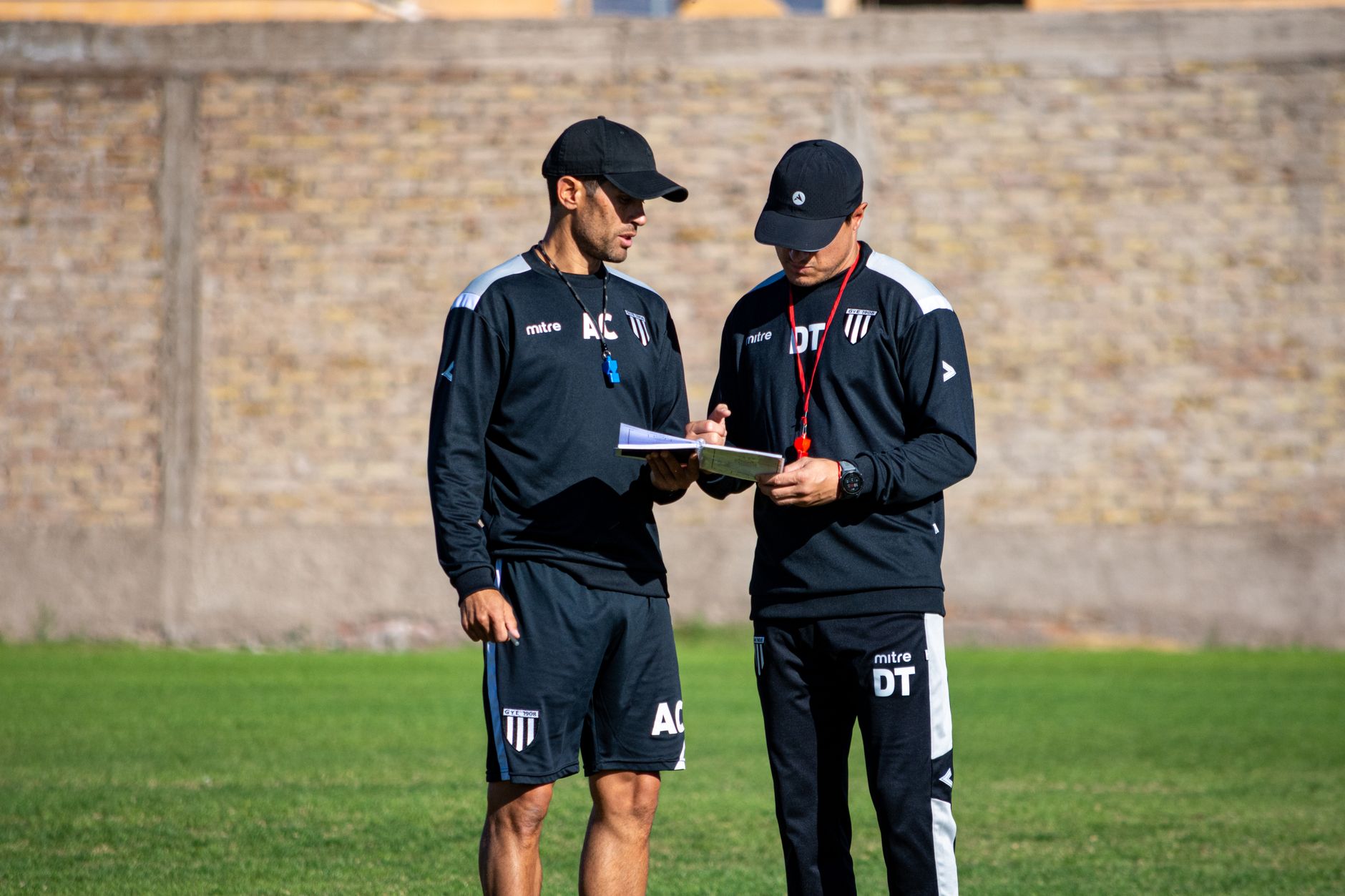
Photo by Franco Monsalvo on Pexels
The best football fitness training tips are specific, measurable, and position-aware: train endurance with intervals, speed with full recovery, strength with unilateral exercises, and football intelligence through small-sided games. Build 3 hard training days around 2 strength sessions, protect 1 complete rest day, and review objective results after 30 days. Do not chase exhaustion; chase repeatable quality. That is how a tired player becomes the one still making the correct decision in the final minutes.
Ready to compare training insight with tournament-level performance analysis?
Frequently Asked Questions
Q: What are football fitness training tips?
A: Football fitness training tips are methods for improving endurance, sprinting, strength, agility, mobility, and recovery for match demands. A balanced week usually includes 2 strength sessions, 2 conditioning sessions, 1 football-specific speed or small-sided game session, and at least 1 rest day. The exact workload should reflect position, age, training history, and match schedule. Track sprint quality, total minutes, soreness, sleep, and technical performance rather than relying only on how exhausted you feel.
Q: How can I improve football stamina quickly?
A: Improve football stamina by combining easy aerobic work with repeated high-intensity intervals over at least 4 weeks. Begin with 8 rounds of 30 seconds hard and 60 seconds easy, then progress gradually toward longer efforts while maintaining running quality. Add small-sided games of 3–4 minutes because they combine conditioning with passing, scanning, pressing, and decision-making. Avoid increasing total running and sprint volume aggressively in the same week, as that often creates fatigue instead of useful adaptation.
Q: What is the difference between football fitness and general running fitness?
A: Football fitness includes repeated sprinting, acceleration, deceleration, directional changes, strength, technical execution, and recovery between efforts, while general running fitness usually emphasises continuous pace. A football player may cover 8–12 kilometres in a match but still perform hundreds of short movement changes. Therefore, a 5-kilometre personal record does not automatically prove match readiness. Use intervals, sprint work, strength exercises, and ball-based games to reproduce football’s intermittent demands.
Q: Why does my football fitness training not improve my match performance?
A: Your training may not improve match performance because it lacks progression, recovery, position-specific work, or technical decisions under fatigue. Common warning signs include sprint times dropping by more than 10%, persistent soreness above 3/5, and poor sleep for several nights. Record workload for 30 days, reduce excessive volume by 20–30% when necessary, and include small-sided games that connect fitness with tactical behaviour. If pain, dizziness, or unusual fatigue persists, consult a qualified healthcare professional.
Q: How many days per week should a football player train fitness?
A: Most recreational players should complete 3–5 structured training days per week, including 2 demanding conditioning or football sessions and 2 strength sessions when recovery allows. Beginners should start with 3 days and add volume gradually, using at least 1 complete rest day. Avoid placing maximal sprints immediately beside heavy lower-body strength or competitive matches. The correct schedule is the one that allows high-quality performance without a steady rise in soreness, fatigue, or injury symptoms.
Q: Is strength training good for football players?
A: Strength training is highly beneficial for football players when it improves force production, stability, acceleration, and injury resilience without compromising movement quality. Prioritise split squats, Romanian deadlifts, step-ups, calf raises, Copenhagen planks, pushing, and pulling exercises 2 times per week. Use 3–5 sets of 3–8 controlled repetitions for major movements and stop before technical failure. Compare strength gains with 20-metre sprint times; if speed declines by more than 5%, reduce lower-body volume.
Q: How much does a football fitness programme cost?
A: A basic football fitness programme can cost nothing if you use a pitch, cones, a stopwatch, bodyweight exercises, and a training log. A gym membership may cost approximately $20–$100 per month depending on location, while GPS tracking devices and coaching add further expense. Equipment is not the main performance barrier: consistent progression, sleep, nutrition, and measurement matter more. Spend first on safe footwear and qualified medical or coaching support if you have pain, previous injuries, or complicated training needs.
Track your work, respect recovery, and use evidence rather than noise. Stadium View will continue covering FIFA World Cup 2026 tactics, player statistics, predictions, and tournament developments for readers who prefer analysis with numbers instead of empty shouting.
Thank you for reading.
Stadium View · Editorial Archive · No. 01