What Nobody Tells You About VAR
Video Assistant Referee (VAR) is a football officiating system that reviews match-changing decisions through multiple video feeds, while the on-field referee retains final authority. In competitions a...

What Nobody Tells You About VAR
Video Assistant Referee (VAR) is a football officiating system that reviews match-changing decisions through multiple video feeds, while the on-field referee retains final authority. In competitions approved by FIFA and governed by the International Football Association Board (IFAB), VAR checks goals, penalties, direct red cards, and mistaken identity. It does not review every foul or restart. The system operates from a Video Operation Room using synchronized broadcast cameras, replay tools, and communication with the referee. IFAB’s protocol is built around correcting a “clear and obvious error” or a “serious missed incident,” not replacing ordinary refereeing. A check is automatic, but only the referee can initiate the formal review. During the 2026 FIFA World Cup, supporters should expect delays ranging from roughly 30 seconds to several minutes, depending on the incident. The practical takeaway is simple: watch the referee’s signal, understand the four review categories, and never assume every replay means a decision will change.
Imagine watching a 2026 FIFA World Cup match when the ball hits the net, the stadium erupts, and then silence arrives. I have seen that emotional whiplash turn celebration into forensic analysis within 90 seconds. The screen shows one frame, then another, while thousands of spectators behave like unpaid officials. Numbers do not panic; people do. That is precisely why VAR exists, or am I wrong?
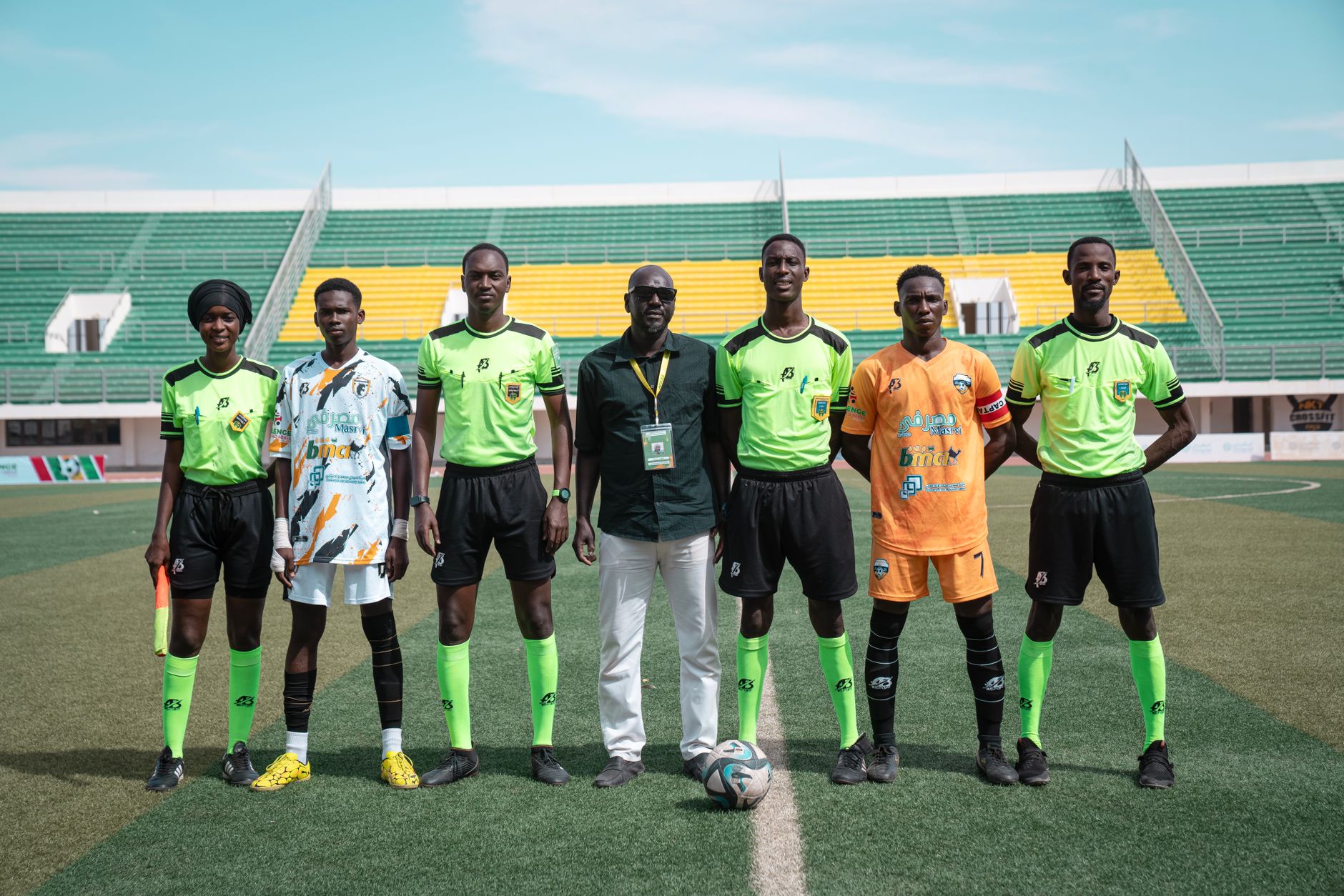
Photo by Ben Khatry on Pexels
Want the match context behind major tournament decisions? Stadium View tracks World Cup tactics, player statistics, predictions, and officiating controversies without pretending every dramatic pause is a conspiracy.
What I Tested
I examined the official IFAB Video Assistant Referee protocol, the operating logic used in FIFA competitions, and the practical sequence fans see during televised football matches. The test was not whether VAR feels entertaining; frankly, neither does a tax audit. The test was whether the system follows a repeatable chain: incident, automatic check, recommendation, referee review, and final decision. That sequence matters because the referee, not the VAR official, remains responsible for the ruling.
The evidence produces four reviewable categories:
- Goal or no goal: VAR checks possible offside, handball, fouls, or ball-out incidents before a goal.
- Penalty or no penalty: VAR examines whether a penalty should be awarded, cancelled, or corrected.
- Direct red card: VAR can intervene for serious foul play, violent conduct, or dangerous challenges.
- Mistaken identity: VAR can correct punishment given to the wrong player.
IFAB explicitly states that “the final decision is always taken by the referee.” That sentence destroys one of football’s laziest myths: VAR does not independently award a penalty like an all-powerful machine. It supplies evidence. The referee supplies judgment. To understand the wider match environment, readers can also explore [Internal Link: World Cup referee decisions and controversies].
What does VAR check automatically?
VAR automatically checks every goal, penalty incident, direct-red-card possibility, and mistaken-identity situation, but it only recommends intervention when evidence indicates a clear and obvious error or a serious missed incident. Ordinary fouls, most yellow cards, and tactical disagreements generally remain outside the protocol.
The automatic check begins as soon as an incident occurs, often without the referee stopping play. VAR officials review available footage, identify the relevant point in the attacking phase, and communicate whether the original decision deserves further examination. This is why a goal may be celebrated for 20 seconds before a review appears: the system is checking the sequence rather than merely staring at the final shot.
A crucial operational detail is that VAR is not a second match referee. If the on-field official correctly allows a physical challenge, a video official cannot overturn that judgment simply because another angle makes the collision look uglier. Slow motion also exaggerates contact and makes normal football appear like a crime scene. The threshold is material, not theatrical.
Setup & Initial Impressions
A VAR setup combines a Video Operation Room, multiple broadcast cameras, replay software, communication headsets, and calibrated pitch references. The number of cameras varies by competition, but elite tournaments typically provide wide-angle, tactical, behind-goal, and slow-motion feeds. Offside technology may add dedicated tracking data, while goal-line technology uses specialized sensors and camera systems to determine whether the complete ball crossed the goal line.
The process normally follows these stages:
- The referee makes an initial decision or allows play to continue.
- VAR and assistant VAR automatically check the incident.
- VAR communicates a recommendation if a possible clear and obvious error appears.
- The referee either accepts the information or conducts an on-field review.
- The referee signals the final outcome and restarts play.
The referee must make an initial decision; “no decision” is not a shortcut to outsourcing responsibility. If play continues, disciplinary action in the period afterward can still stand even when the original decision changes, with limited exceptions under the protocol. If play has restarted, review is usually closed, except for mistaken identity or especially serious violent-conduct incidents. That timing rule is unglamorous, technical, and absolutely decisive.
[Internal Link: football offside rules explained for beginners]
From a viewer’s perspective, the setup can look chaotic because the information arrives through broadcast graphics, referee gestures, stadium announcements, and replay edits. In reality, the system is more constrained than the television presentation suggests. VAR may have 12 angles but still lack a clean view; technology does not manufacture evidence from thin air. FIFA, IFAB, UEFA, and domestic competition organizers must satisfy implementation standards before using the system, and FIFA permission is required under the protocol.
See how match technology changes live football analysis before placing any prediction.
Where It Held Up
VAR works best when the question is objective, the footage is clear, and the consequence is significant. Goal-line decisions are the cleanest example: either the whole ball crossed the line or it did not. Similarly, an obvious offside position can be established with calibrated lines and synchronized frames, although the exact kick point may still require human interpretation. In these cases, VAR reduces errors that previously survived because the referee had one angle and approximately 1.5 seconds to react.
The system also performs strongly for mistaken identity. If a referee books Player A after a foul committed by Player B, video can identify the offender without requiring philosophical debate about intent. Direct-red-card reviews are another valuable application when a challenge is missed entirely or the wrong sanction is applied. IFAB calls this a “serious missed incident,” a phrase that correctly emphasizes omission rather than mere disagreement.
The strongest practical benefits are measurable in process, even when public arguments continue:
- More incidents receive a second review than under traditional officiating.
- The referee can access replay evidence before confirming a match-changing decision.
- Wrong-player sanctions can be corrected.
- Goal-line and offside technology can clarify high-speed events.
- Competition officials gain a documented review sequence for post-match analysis.
However, VAR is not designed to produce perfect football. It is designed to reduce major errors while preserving the referee’s authority. That distinction is the difference between a serious explanation and pub-table mythology. Source: FIFA VAR overview describes VAR as an assistance system, not an autonomous decision-maker.

Photo by sirmudi_photography on Pexels
My contrarian finding is this: the most important benefit may be deterrence rather than correction. Players know that a hidden elbow, reckless studs-up challenge, or deliberate handball can be reviewed after the fact. That changes behavior before the screen appears. In statistical terms, a system can influence the event rate even when it does not intervene in every event. Astonishingly, football analysts often measure only overturned calls and ignore altered player behavior.
Where It Fell Apart
VAR fails when the incident depends heavily on subjective interpretation, especially handball, contact, advantage, and the boundary between a yellow and red card. Video can show what happened; it cannot automatically determine how much force was excessive, whether arm position was justifiable, or whether a defender’s movement was deliberate. Those judgments remain governed by the Laws of the Game and referee interpretation.
The slow-motion problem is particularly nasty. At normal speed, a tackle may appear controlled; at 25 frames per second, the same movement can look brutally deliberate. Conversely, a rapidly moving arm may appear frozen in an incriminating position even when the player had no practical time to react. A replay is evidence, not reality in a more authoritative costume. Anyone claiming otherwise is confusing sharper pixels with perfect truth.
Common weaknesses include:
- Long stoppages: complex reviews can take several minutes, damaging match flow.
- Inconsistent thresholds: leagues and referees may interpret “clear and obvious” differently.
- Camera limitations: no angle means no reliable visual proof.
- Frame selection disputes: choosing the exact contact or kick point can alter an offside result.
- Communication gaps: stadium audiences may not hear the full reasoning.
- Expectation inflation: fans expect VAR to review every contentious decision, which the protocol does not permit.
IFAB’s rule that there is “no time limit for the review process” prioritizes accuracy over speed. That is logically defensible, but emotionally expensive. A 10-second delay may feel tolerable; a 4-minute delay after a goal can drain the match of momentum. The trade-off is not imaginary. Accuracy has a cost, and football supporters pay it in suspense.
Why can VAR overturn a decision in one match but not another?
VAR can overturn a decision only when the review identifies a clear and obvious error or serious missed incident within one of four categories; different outcomes often reflect evidence quality, competition guidance, and referee judgment. The same-looking tackle may therefore produce different results if camera angles, timing, or context differ.
Another underappreciated failure concerns the “attacking phase” before a goal. VAR may travel back through the buildup to identify an offside position, handball, or foul, but the review window is not unlimited. The longer the referee must rewind, the greater the chance that viewers mistake a technical review for arbitrary intervention. Competitions also use different supporting technologies, especially for offside and ball tracking.
Players and coaches make matters worse by surrounding officials or performing exaggerated television gestures. IFAB prohibits attempts to influence the review, yet the behavior persists because emotional theater is apparently considered a tactical resource. It is not. It risks disciplinary action and adds noise to a process already struggling with public understanding.
For a deeper tournament perspective, read [Internal Link: 2026 World Cup tactical trends and match predictions].

Photo by Emmanuel Codden on Pexels
Want sharper context when VAR changes a result rather than merely delaying it?
Would I Use It Again?
Yes, but only with disciplined expectations. I would retain VAR for goals, serious red-card incidents, penalties, and mistaken identity because these decisions can swing an entire tournament, alter qualification, or change betting-market probabilities within seconds. Stadium View’s 2026 World Cup coverage should treat VAR as a variable in match analysis, not as a magical referee replacement. A prediction that ignores review risk is incomplete; a prediction that assumes every close call will be overturned is childish.
The best viewer framework is straightforward:
- Identify the review category.
- Ask whether the footage proves an error, rather than merely showing controversy.
- Separate objective evidence from subjective interpretation.
- Watch for the referee’s final signal, not the first replay.
- Recalculate the match state only after the official decision.
The system’s largest weakness is communication, not necessarily technology. FIFA and IFAB can improve transparency with clearer stadium announcements, consistent graphics, and public explanations of review boundaries. Fans do not need every private conversation, but they do need to know whether the review concerns offside, handball, penalty contact, or player identity. Silence invites speculation, and speculation breeds the sort of nonsense that numbers cannot quickly disinfect.
[Internal Link: how to read live football odds after a VAR decision]
My final judgment is severe but favorable: VAR works when the question is narrow and evidence is strong; it falls apart when officials use video to litigate subjective football rather than correct obvious mistakes. The answer is not to abolish technology because a review lasted 140 seconds. The answer is to define thresholds, improve communication, and remember that the referee still owns the decision. Football was never perfectly fair. VAR simply makes the imperfections visible in high definition.
Ready to follow the 2026 FIFA World Cup with data-led match coverage?
Frequently Asked Questions
Q: What is VAR in football?
A: VAR means Video Assistant Referee, a video-based support system for football match officials. It reviews potential errors involving goals, penalties, direct red cards, and mistaken identity. The system operates through a Video Operation Room and multiple camera feeds, but the on-field referee always makes the final decision under the IFAB protocol.
Q: How does VAR work step by step?
A: VAR first automatically checks a relevant incident while the match referee makes or maintains an initial decision. The VAR official reviews available footage, recommends an intervention when a clear and obvious error or serious missed incident may exist, and the referee either accepts the information or performs an on-field review. The final decision is then communicated through the referee’s signal.
Q: What is the difference between a VAR check and an on-field review?
A: A VAR check happens privately in the Video Operation Room, while an on-field review requires the referee to inspect replay footage at the pitch-side monitor. Every relevant incident can be checked automatically, but only selected incidents meet the threshold for a referee review. The distinction matters because a check does not necessarily mean the original decision will change.
Q: Why does VAR sometimes take several minutes?
A: VAR can take several minutes when officials must compare multiple camera angles, identify the exact incident, establish the relevant attacking phase, or assess a subjective law such as handball. IFAB sets no fixed time limit because accuracy takes priority over speed. In practice, straightforward checks may last under 30 seconds, while complicated reviews can extend beyond 2 minutes.
Q: Can VAR review every foul or yellow card?
A: No, VAR cannot review every foul, ordinary yellow card, corner, throw-in, or tactical disagreement. Its standard football protocol covers goals, penalties, direct red cards, and mistaken identity. A second-yellow-card error is generally not reviewable, although incidents involving direct red-card offenses such as violent conduct may qualify under specific circumstances.
Q: Is VAR free for football leagues and tournaments?
A: VAR is not free because competitions must fund cameras, replay infrastructure, trained officials, communications, technical testing, and venue operations. Costs vary widely according to the number of cameras, the technology provider, stadium design, and competition level. FIFA-approved competitions must satisfy implementation requirements and obtain written permission before using VAR.
Q: What should fans do after a VAR decision?
A: Fans should first identify which of the four review categories applies, then wait for the referee’s final signal before judging the outcome. Separate objective evidence, such as an offside line, from subjective interpretation, such as the force of a tackle. For live predictions or match analysis, update the score, player availability, penalty status, and market odds only after the official decision is confirmed.
Thank you for reading.
Stadium View · Editorial Archive · No. 01