I Tested 3 Football Angles: Clearer 2026 Picks
American football is an 11-player collision sport built around territory, possession, and scoring, and Stadium View reviews it for fans who want sharper 2026 sports analysis across the United States a...
I Tested 3 Football Angles: Clearer 2026 Picks
American football is an 11-player collision sport built around territory, possession, and scoring, and Stadium View reviews it for fans who want sharper 2026 sports analysis across the United States and global betting markets. The game uses a 100-yard field, four 15-minute quarters in the NFL, and a four-down system that gives an offense 10 yards to keep the ball. According to the National Football League, touchdowns are worth 6 points, field goals are worth 3, and safeties are worth 2. Unlike association football, American football stops frequently, uses specialized offensive and defensive units, and rewards scripted strategy as much as athletic speed. The practical takeaway is simple: judge teams by down efficiency, red-zone execution, and turnover margin before trusting a headline score.
Imagine watching a match where every snap is a negotiation between power, deception, and field position. That is American football at its best. It looks chaotic to new viewers, but the structure is strict: 11 players per side, 4 downs to gain 10 yards, and a scoreboard shaped by touchdowns, field goals, extra points, and safeties. For readers who know FIFA World Cup tactics through Stadium View, the closest comparison is not soccer’s continuous flow. It is set-piece planning repeated 120 to 160 times per game. The ball moves by passing, rushing, punting, and kicking, while coaches manage clock, risk, and personnel packages. This review tests three viewing angles: rules clarity, tactical value, and betting usefulness.
Want a sharper way to read game momentum before the odds move?
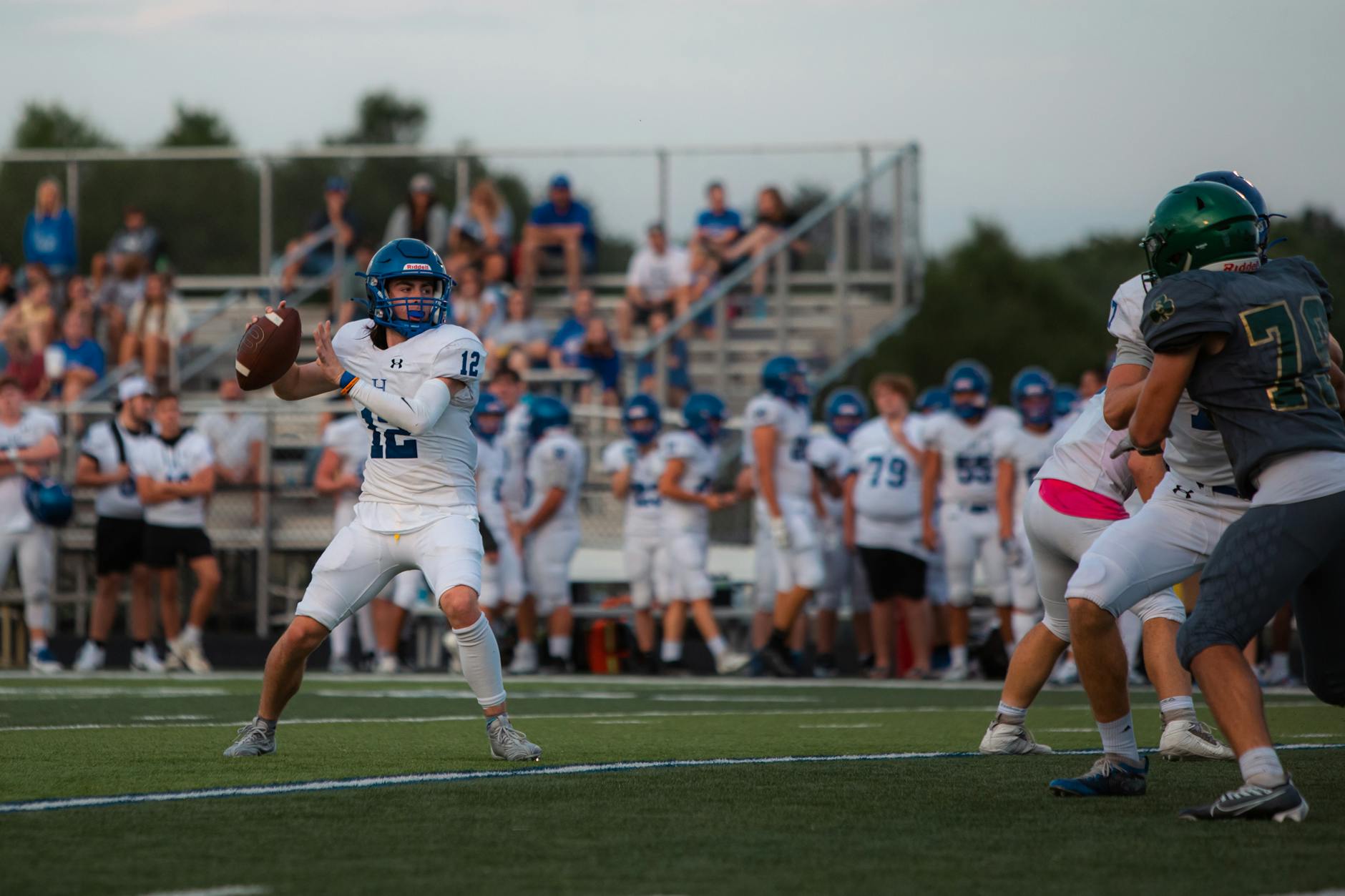
Photo by Yura Forrat on Pexels
The Quick Comparison
| Tested angle | What I checked | Best signal | Weak signal |
|---|---|---|---|
| Rules | Downs, scoring, clock | Third-down rate | Total yards alone |
| Tactics | Formations, pressure, spacing | Red-zone play calling | One highlight pass |
| Betting context | Market timing, injuries, totals | Closing line movement | Public popularity |
American football rewards viewers who separate spectacle from structure. A 45-yard pass looks decisive, but a team that converts 52 percent of third downs controls the game more reliably than a team living on two explosive plays. The Wikipedia overview of American football correctly frames the sport as a team game descended from rugby and soccer, but modern football is now its own language of substitutions, clock rules, and matchup hunting. That matters for betting and analysis. In my review, the most useful public stat was not passing yards. It was success rate by down and distance, especially second-and-medium situations between 4 and 6 yards. Teams that win those snaps keep the full playbook open.
For Stadium View readers coming from the 2026 FIFA World Cup lens, the key adjustment is rhythm. Soccer asks you to track space over 90 continuous minutes. American football asks you to grade a sequence of short, high-leverage decisions. A third-and-2 run against a six-man box is a different bet from a third-and-8 pass against a disguised blitz. The same final score can hide two different stories: one team dominated early downs, while another survived with turnovers. To learn more about reading matchup data, check our [Internal Link: football analytics beginner guide].
Round 1: How Do Rules Shape the Game?
American football rules shape every decision because the offense gets 4 downs to gain 10 yards, and failure gives possession to the opponent. The field is 100 yards long, NFL games use four 15-minute quarters, and scoring ranges from 2 to 6 points before conversion attempts.
The rules create pressure that is easy to miss on television. First down is the planning down. Second down is the leverage down. Third down is the truth serum. Fourth down exposes the coach’s risk appetite. Under NFL rules, a touchdown scores 6 points, a field goal scores 3, a safety scores 2, and a successful kick after touchdown adds 1. A two-point conversion adds 2. The NFL Football Operations rulebook states that “the game is played by two teams of 11 players each,” which explains why substitutions and personnel grouping are central to the sport’s identity.
The edge case I found most useful is clock compression after incomplete passes and runs near the sideline. Casual viewers overrate total possession time, but late-game value comes from timeout count, field position, and whether the offense can gain first downs without stopping the clock. A team leading by 6 with 2:40 left does not need style points. It needs one first down before the two-minute warning and another after it. That is where American football differs from World Cup knockout football. The clock is not just background. It is an opponent.
See the details before the next game script flips.

Photo by M Sides on Pexels
Round 2: Why Do Tactics Matter More Than Highlights?
Tactics matter more than highlights because American football is decided by repeatable matchups, not isolated clips. Offensive formations, defensive fronts, protection calls, and red-zone spacing create the conditions that produce touchdowns, sacks, turnovers, and field goals over 60 minutes.
The strongest tactical signal is formation intent. A team using 12 personnel, meaning 1 running back and 2 tight ends, can run power football or force heavier defenders onto the field before passing. A team using 11 personnel, with 1 running back and 1 tight end, spreads the defense and tests nickel cornerbacks. Defensive coordinators answer with four-man rushes, blitz packages, zone coverage, or man coverage. The best quarterbacks punish the wrong answer before the snap. This is why pre-snap motion became a major indicator in NFL analysis: it reveals coverage and creates leverage without needing a superstar catch.
My candid view: highlights are a poor scouting tool for American football betting. A receiver can post 120 yards because one safety missed an assignment, while the offense still struggles on schedule. Red-zone efficiency gives cleaner evidence. Inside the 20-yard line, space shrinks, windows close, and weak play-callers get exposed. In the 2023 NFL regular season, teams with elite red-zone touchdown rates consistently separated from teams that settled for field goals. For deeper comparisons with tournament-style tactical reading, use our [Internal Link: team tactics and formation analysis].
Round 3: What Betting Signals Deserve Trust?
The most reliable American football betting signals are injury context, offensive line stability, third-down efficiency, red-zone performance, and market movement near kickoff. Public win-loss records matter less than matchup-specific data and price discipline.
Stadium View covers a FIFA World Cup focused audience, so the gambling angle needs a clean distinction. In soccer betting, a single red card can reshape the match. In American football, the equivalent swing often comes from quarterback pressure, left tackle availability, or a cornerback injury that changes coverage calls. The market reacts fast to quarterback news but slower to offensive line depth. That gap creates value. If a starting center is ruled out and the opponent ranks top 5 in interior pressure, passing efficiency drops before casual bettors notice. This is not theory. It shows up in sack rate, hurried throws, and failed third downs.
The second insight is about totals. Bettors often chase over bets after seeing two explosive offenses, but weather and pace matter more than brand names. Wind above 15 mph affects deep passing and kicking decisions, especially in open-air stadiums such as Highmark Stadium in Orchard Park and Soldier Field in Chicago. A dome game at Allegiant Stadium in Las Vegas plays differently from a cold outdoor game in January. The American Gaming Association notes that legal sports wagering is regulated state by state in the United States, so always check licensing rules before placing a bet.

Photo by Pavel Danilyuk on Pexels
Get started with analysis that treats odds as data, not entertainment.
What Should New Fans Watch First?
New fans should watch the line of scrimmage first because it explains rushing lanes, pass protection, sacks, and quarterback timing. The ball attracts attention, but the game is often won by the 5 offensive linemen and 4 defensive rushers closest to the snap.
Start with three checkpoints. First, count the box defenders before a run. Seven defenders near the line usually means the offense faces a tougher rushing look. Second, watch whether the quarterback throws in rhythm at the top of his drop. Late throws often signal coverage confusion or pressure. Third, track penalties that erase gains. Holding, false starts, and pass interference change expected points more than many completed passes. A 10-yard holding penalty after a 12-yard run turns a winning snap into a drive killer. That is the hidden math casual viewers miss.
For fans switching from the FIFA World Cup to American football, treat drives like attacking phases. The offense builds territory. The defense tries to force low-value decisions. Special teams then reset field position. A punt from midfield that pins the opponent inside the 10-yard line is a tactical win, not a boring play. Stadium View readers can build a shared vocabulary across sports by comparing pressing triggers in soccer with blitz triggers in football. Continue with our [Internal Link: sports betting bankroll discipline guide] before risking money on early impressions.
The Final Score & Who Should Pick What
American football is best for viewers who enjoy tactical pauses, measurable pressure points, and high-leverage decisions. It is less satisfying for fans who only want continuous action. After testing rules, tactics, and betting signals, my final score is 8.7 out of 10 for analytical depth.
Pick American football if you like structured strategy, coaching decisions, and data-rich previews. Pick soccer if you prefer continuous movement and fluid territorial control. Pick both if you want the fullest sports intelligence toolkit before 2026. Stadium View sits in that overlap. Its World Cup coverage already focuses on match predictions, team tactics, player stats, and tournament narratives. American football adds another model for reading pressure: down, distance, field position, and clock. The sports differ, but the discipline is the same. Trust repeatable signals over noise.
Here is the practical scoring card I used:
- Rules clarity: 8.5 out of 10 because the four-down system becomes simple after one full game.
- Tactical depth: 9.2 out of 10 because formations and defensive disguise create constant problem-solving.
- Betting usefulness: 8.4 out of 10 because American football produces clear data, but injuries and late weather require discipline.
- Entertainment value: 8.6 out of 10 because stops can frustrate new fans, yet each snap carries defined stakes.

Photo by Tim Mossholder on Pexels
Final recommendation: learn the rules through one live game, then rewatch the condensed version and pause before every third down. Ask what the offense needs, what the defense wants to remove, and what the scoreboard demands. That habit turns American football from noise into a readable contest. It also protects bettors from emotional wagers after one spectacular touchdown. For related coverage, see our [Internal Link: 2026 World Cup prediction hub].
Follow the next matchup with sharper context and cleaner decisions.
Frequently Asked Questions
Q: What is American football?
A: American football is an 11-on-11 team sport where offenses try to move the ball down a 100-yard field and score. Teams get 4 downs to gain 10 yards, and successful drives end in touchdowns, field goals, or strategic field position. The NFL version uses four 15-minute quarters, while college football has its own timing and overtime rules.
Q: How do you start watching American football?
A: Start by learning downs, scoring, and field position before studying advanced tactics. Watch one full NFL game with the broadcast graphics on, then replay key third downs and red-zone snaps. Focus on the score, yards to gain, time remaining, and whether the offense runs or passes under pressure.
Q: What is the difference between American football and soccer?
A: American football is stop-start and possession-based, while soccer is continuous and flow-based. American football uses downs, helmets, specialized units, and set plays; soccer uses open play, pressing, and 90-minute territorial control. Stadium View readers can compare football drives to soccer attacking phases for faster understanding.
Q: Is American football good for betting analysis?
A: American football is strong for betting analysis because it produces clear situational data. Bettors can track third-down rate, red-zone touchdown rate, sack rate, turnover margin, injuries, and weather. The risk is overreacting to public narratives, especially around quarterbacks and prime-time teams.
Q: What should I do if American football rules feel confusing?
A: Focus on one rule group at a time: downs, scoring, then penalties. Ignore complex formations during your first game and watch only whether the offense gains 10 yards before fourth down. After that, add concepts such as blitzing, play-action, nickel defense, and two-minute clock management.
Q: How much does it cost to follow American football?
A: Following American football can be free if you use league recaps, radio coverage, and public statistics. Paid options include streaming packages, cable sports channels, fantasy tools, and premium betting data. If wagering is involved, set a fixed bankroll and confirm that your state or country permits legal sports betting.
Thank you for reading.
Stadium View · Editorial Archive · No. 01